Wednesday, September 17, 2008

Speak of the Lil' Devils

Speak of the Devils: A look at an interesting phenomenon in three articles.
Editor's note: If camaraderie marks all TNE chapters, some are exclusively for that purpose. Other TNE chapters have been proponents of student empowerment and administrative reform, being the original force behind the very institutions of student government and student trustees. Chapters have been vocal and sometimes devilish, or impish critics at their schools. The articles below (which we reproduce but do not endorse as factual) focus on TNE or "the Machine" at the University of Alabama. The articles are critical, probably unfairly so.

The Machine today: menace or myth?
Ryan Hickman, special projects editor
March 31, 2006


Has the Machine, like Foster Auditorium, just become part of the University of Alabama's folklore?

March 31 Dateline Alabama tracks the contemporary political climate at the University of Alabama to gauge whether the historically mysterious Machine is more mythology than menace.

When the high sun of spring goes down at the University of Alabama, the campus whispers with history. You can hear Gov. George Wallace’s voice outside Foster Auditorium, the chatter of Union troops as you walk past the president’s mansion, and murmurs of the Machine coming from fraternity and sorority rows.

But, like the other tales that have made UA the South’s most historical grounds for learning, has the concept of the Machine simply devolved into university folklore?

Like all good legends, the group of traditionally white fraternities and sororities, as the Machine is most generally defined, has maintained its legacy through the assortment of stories that follow it around. With many things in the South, history dictates the present.

By all accounts, The Crimson White began referring to a select group of student organization representatives at the university as the Machine in the 1920s, and that became part of the newspaper’s terminology during the 1940s. The campus publication has been the narrative of the group since. The pseudonym for the fraternal sect stems from their mechanical efficiency in placing and winning Student Government Association elections and other politically charged competitions, like homecoming, at the university.

The Machine’s occult characteristics stem from its bloodlines with Theta Nu Epsilon. The fraternity, which has its origins in secretive societies from the Bones at Yale, was initiated at UA by Lister Hill in 1914. Hill followed the lead of the original chapter of TNE formed at Weslyan University before the turn of the 20th century.

Overtime the mission grew- to initiate student government, to coordinate student bodies, select and run candidates for student government and to tie together various pre-existing student groups nationally. While maintaining a highly selective, exclusive membership, the TNE-backed candidates became sure-things in all university elections. According to most accounts TNE nationally is not centralized and there are several different coordinating bodies and even more independent groups.

Due to the shrouded history of TNE and today’s Machine few are sure if it is the old organization just going by another name publicly (it was also once called "the Group"). Regardless, the Machine or TNE represents a combined greek organization to promote candidacy within the SGA.

The perpetual success of the Machine in SGA elections, combined with its rigidly fraternal and publicly cloaked structures, furthers the underground and secretive traits that loom today. Speculation of the Machine’s participation in tactics behind each negative political incident on the campus has turned into automatic assumption because of the group’s hush-hush persona.

Each new story of cross burnings, physical intimidation and wrongdoing in SGA elections only whips the winds of conspiracy into a greater frenzy. Although Minda Riley’s assault in 1992 is no matter to disregard; and John Merrill’s office break-in cannot be disputed; and the cross burning on the Kappa Kappa Gamma house lawn following the electing of Cleo Thomas as SGA president in 1976 should not be scoffed at, these events have piled up on each other and taken on a life of their own.

The stories are part of the Machine legend at UA and continue as evidence for non-greeks to substantiate the deeper cabalistic presumptions of the group—ritualistic initiation and secretive meetings to decide the moves of the SGA in the basements of fraternity and sorority houses (on Wednesdays or Sunday nights, depending on which report you ascribe to) —that the group’s critics like to dwell on.

Skeptics, and many greeks, will say that the stories of the past have been taken to extremes, and like a bad game of broken telephone, have aggrandized into exaggerated, hyperbolized tales constantly rehashed just to sell newspapers.

Racist death threats, verbal and physical harassment and shadowy organizations at an already historically inflamed campus in the Deep South are not just good fodder for The Crimson White, The Tuscaloosa News and harangues in the blogosphere, but are engaging stories for national audiences.

Outside Affirmation- The tales of the UA Machine brought Philip Weiss to Tuscaloosa to investigate his now infamous Esquire cover story from 1992, and the Machine’s reputation of racism through the segregated greek system lured Jason Zengerle of The New Republic to town for his article in 2002.

Preservers of Machine mythology will point to the CNN piece in 1999 about SGA presidential candidate Fabien Zinga’s death threat and the mention in the 2004 Newsweek story surrounding hardball campus politics as evidence of external eyes confirming an internal phenomenon.

The national attention tacitly legitimizes the influence that the Machine wields today in people’s minds. The past props up the present with folklore and sometimes the mental perception of a political group’s power can be more daunting than what they actually are. With a dogmatically private organization like the Machine where outsiders have no real knowledge of their decision-making, particular incidents that occurred in the past are the only evidence that can substantiate critics’claims of misdeed by the group today. Every disparager of the greek-backed Machine uses the mythical past to generalize the present and future.

A murky past feeds today's critics- In an opinion piece on Feb. 27 in The Crimson White, Matt Dover lambasted the present Machine for its alledgedly racist actions in the past. Matt Dover is the chairman of the ethical government watchdog group and anti-Machine activist Capstone Political Action Committee, (the Machine is also said to be connected to a number of Political Action Commitees that have grown into statewide political entities.)

Dover wrote, referring to the local Machine representatives of TNE. “The Machine has never supported a single candidate of color and has bitterly opposed the advancement of minorities on campus at every step.” However, a day later though, following a presentation by Cleo Thomas, the only black SGA president in the school’s history, Dover played down his sweeping strokes of racism attributed to the Machine in his editorial.

“I don’t think it is institutionally racist,” Dover said. “Their actions have been racist. The University of Alabama has been racist. It’s hard to distinguish between individual and institution.”

Dover did state that the Machine has been exclusive since its inception, predating any racial strife on the UA campus. Examining the issue of race might be more suited to an investigation of the segregated greek system, rather than SGA elections. But associating racism with the Machine furthers the air of malicious secrecy.

Intimidation rather than racism- For Nick Beadle, the Machine is more about intimidation than racism.

“The whole thing is driven by fear,” Beadle said. “They are flamboyant about it. They let you know that they are out there.” Or at least that is his perception.

Beadle, the current managing editor for The Crimson White, has been a chronicler of the Machine as a reporter and student life editor of the campus newspaper. Beadle was responsible for the candid article “You don’t want to mess with us” that ran two years ago in the CW detailing accounts of intimidation and stiff structure within the greek system for electing SGA members.

The story stood on the accounts of Emily Aviki, a member of Chi Omega, and Emily Lumpkin, an Alpha Gamma Delta sister. It detailed how the sorority was pressured by Machine members and the greek system as a result of Aviki’s successful SGA senate campaign in 2003.

Beadle knew that his story was going to incite some rumbling across the student population, especially from fraternity and sorority members, but the worst part for him was not when the story ran, but rather the anticipation leading up to it.

“We didn’t let anyone else know, so that it wouldn’t get out,” Beadle said, referring to himself and only one other staff member at the CW that knew about the impending story in 2004. “We couldn’t take the chance.”

Beadle explained that he was worried that Machine members would catch wind of his interviews with Aviki and Lumpkin, who both have transferred to Duke University (where there is also a TNE chapter), and inflict some of the same heavy-handed tactics that have been synonymous with the group in the past and felt by his two sources.

Beadle said that he slept at night with a baseball bat the entire time he was working on the article.

But nothing happened to Beadle. No intimidation. No physical harm. No crosses burned on his lawn. He took the precautions because of events that have compounded themselves into a menacing thought, at least in his mind.

Most greeks probably don’t mind the perception of their power. It draws people in and keeps the allure of the system’s power alive. Even Lumpkin admitted that she was captivated with the mystique surrounding the Machine, quoted in the CW article as saying, “I was intrigued by its mysteriousness.”

Does the lust for power from members within the greek system become so emotionally overwhelming that certain individuals feel they need to uphold it by administering acts of violent intimidation? It might be an explanation for the specific incidents that have transpired in the past that have transformed into mammoth tales surrounding the Machine today.

“[The] stories from the past—true or not—are stories,” said Justice Smyth, the 2006-2007 SGA president-elect, in his VP of student affairs office during this year’s campaign.

This spring’s election ran blemish-free, with Smyth taking the presidential race by a substantial margin.

Of the four candidates for SGA president this year, Smyth, a member of Old Row fraternity, was the only one with greek affiliations. That pretense automatically put Smyth as the Machine-backed candidate.

“I don't know about the Machine. If you want to say I’m the Greek candidate, you can say that, but I’m not,” Smyth said regarding his relationship with the Machine. “I didn’t join a fraternity for political reasons.”

As much as Smyth may have denied it, the history of the greek system, the Machine mythology and the SGA presidency dictated the perception of Smyth in the race.

“I like to say that he is what a traditionally Machine-backed candidate looks like,” Smyth’s presidential opponent Corbin Martin, said about him.

Smyth’s results indeed followed suit with the outcome of Machine candidates in the past. He eclipsed second place finisher Adam Rankin by almost 1,500 votes and left additional candidates with minimal support on the ballot.

As the race unfolded, it was clear the two strongest candidates, also with the most SGA experience, had risen to the top in essentially a two-man race. Rankin, a SGA senator, ran an impressive campaign, garnering an endorsement from the CW. Smyth, the current SGA VP of student affairs, showed his polish and experience in elections with an effective campaign of his own.

With Rankin, not a fraternity member, possessing no strong associations to the greek system and Smyth in one of the traditionally most politically powerful houses, the race appeared on the surface in the familiar University of Alabama political divide—Machine vs. Independent.

“I think it is funny that the students here cannot conceptualize elections except in relationship to the Machine,” said Margaret King, the University’s vice president of student affairs. fin

"Roots of The Machine seen in outlawed TNE"
The Crimson White, University of Alabama's Student Daily


The clandestine campus political organization called The Machine has its roots in an older, once national, fraternity which had the same goal as its object--the gain of political power for its own sake.

Theta Nu Epsilon, or TNE, was founded at Wesleyan University in 1870 allegedly as a chapter of Skull and Bones at Yale. Eventually it became an independent organization. Its history is clouded, since at least some of its chapters appear to have been transparent, while others served as another mode of identity for secret political organizations and pre-existing groups.

It was in the second case that TNE masqueraded as a drinking fraternity and promoter of student participation in campus activities which accepted members from established social fraternities. The real purpose of the chapters was to gain political control on their campuses. Where student government did not exist they promoted it.

The next step in the grand plan of TNE was, after securing campus politics, to move into state, and then national, government. "We used to joke that, while we were holding our meetings in some fraternity basement, there must be another one going on [in] the basement of the Capitol," said a former member of the local group.

TNE was unmas
ked during the middle 1930s, however, and came into general disrepute as a result of investigations by various fraternal councils and campus administrations. It was outlawed on many college campuses. In fact there were many manifestations of TNE, including a New York University based leadership sanctioned and led by the head of that university's business school, John T. Madden; a midwestern group; and many more independents.

Though the formal national organization of TNE withered away under the pressure, political activism of the individual chapters continued as many went underground.

The early days of TNE were not without humor, however. A dean of the University of Illinois once declared that "There seems to be little doubt that in the early days, TNE was promoted by unscrupulous jewelry salesmen who secured badges from small, unknown manufacturers of fraternity jewelers."

It is now obvious that TNE on many campuses, as
on this campus, changed its public name when it went underground. While here it took the name of The Machine, similar organizations at Nebraska, the University of North Dakota and the University of Virginia have been unmasked this year under the names "The Iron Mask" and "The Society of the Yellow Rose." Many "Skull and Keys", "Skull and Dagger" and like named societies grew from or were associated with TNE. As a legacy many greek letter fraternities with no current connection continue to use their iconography.

TNE at the University of Alabama, though it has gone under the names The Machine, Th
e Group and The Society of Friends, has continued to operate under the old TNE constitution and rituals since its arrival. More importantly, TNE actually instituted student government (from the days of the cotillion committees) at the University of Alabama giving it a greater notion of authority.

The documents and records of the local group are now
in the hands of the current president. The initiation ritual reads much like that of any other Greek organization, with elaborate and flowery speeches involved in the actual initiation, still followed by the Machine. A pledge is made as to the initiates belief in the "miracle of Jesus Christ" (apparently signifying the central tenants Christianity, in the virgin birth and Savior of Man.)

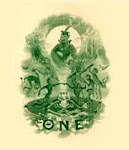
The shield of the organization is a skull with crossed keys below. Other images include daggers, feathers and wings, crosses, hieroglyphics, sk
eletons, flames, serpents, imps or "devils" which are used in various chapters names.

Meetings are held at whatever place that the students can procure as there are no houses for the secret group. Various customs are observed at these meetings including that members hold their beer in their left hand so that the right will remain warm and ready for shaking.

Though in the ritual members are called "Nuktogogi," local members call each other "Malacheeks." Initiates are called "Neophytes." There is an outdoors ceremony also said to be involved.

The Machine here has endured two major crises, o
ne in 1947, the other in 1961.

In 1947 Machine membership was composed almost equally of fraternity and independent representatives. Apparently the original Theta N
u Epsilon felt it was important to have a membership of independents as well as greeks. A quarrel between the two groups arose in April of that year however when the independents became dissatisfied over the number of prime appointments going to members of the big fraternities despite supposed equality of those who were greeks, honor society members or independents.

The independents withdrew and The Machine was supposedly dissolved. However, the fraternities immediately formed a new Machine and continued to function.

The independent faction retained some of its organization for a few years, giving strong opposition to The Machine, but when the strong members graduated, the independent group folded.

In 1961 the Crimson-White exposed the inner working of The Machine for the first time in public.


Though the organization stumbled for a time and lost, through a series of circumstances, its leverage in campus politics, the organization itself remained. The Machine has made considerable gains, especially in the last two years, and now has unquestioned prominence over the less formalized, election-time-only political structures on campus. fin


"The Most Powerful Fraternity in America
Philip Weiss
Esquire Magazine

It controls life at the University of Alabama, but nobody can see it. Its influence extends to the
statehouse, but nobody can touch it. It is, simply, the Machine.

In the dining room of the Delta Tau Delta house, Chad Green stops and stares hard at the picture of the bearded soldier. Chad is tall and dark with an occasional fierce
glare in his eyes, and right now he looks vexed. Abruptly he turns toward the opposite wall. There are another three portraits of soldiers there, six in all.

"No, I think that's A. P. Hill," he says with sudden conviction, pointing to the far wall. "This one I don't know. But of course that's Jeff Davis. And that is definitely Stonewall Jackson. And that one's got to be A. P. Hill."

Chad pauses again. He's stumped on the names of the other three Confederate generals. It seems to bother him. But giving me a wink, he approaches Jeff Davis
and lifts the portrait from the wall. On the back he can still find the number that he penciled there as a freshman fraternity pledge three years before, matching the number he put on the picture hook. He did it so he could put the portraits back in the right places after a party.

"You'd get in trouble if you put them back wrong," he says.

My tour of the Delt house at the University of Alabama is a rich schooling in Southern tradition. Chad shows me the picture of Miss Ruby, the housemother who taught several generations of Delts etiquette. I see the hunting prints and the teak parquet floors of the living room — "It looks like home," says Chad. And there's the pocked, cinder-block wall on the basement landing, where boys throw champagne bottles as hard as they can on the night they're initiated.

"It's the best night of their life," Chad says, vigorously miming the way he threw his bottle.

Only when we're talking politics does Chad lose his cool. We've come outside, onto the semicircular porch of the brick Georgian mansion. It's a beautiful late fall day on fraternity row in Tuscaloosa, Alabama. In the light breeze a pine bough grazes the round portico of the house. Two houses away, at Sigma Chi, pledges are bagging pine needles from the front yard of their brick mansion. In the other direction, at Sigma Alpha Epsilon, pledges are readying a red carpet for the Stockholders' Ball. They're putting up twenty gaslight torches.

Chad's just mentioned all the Delts who've gone into politics when I ask him about the Machine. He gets that cross expression. "I'd rather not comment on that," he says. "I just won't comment."

I press him and he looks away. Ruddy color rises in his cheeks. "There are a lot of secrets to people outside but there are not a lot of secrets inside," he says.

The organization Chad won't talk about is a secret so
ciety that for eighty years has controlled student politics at the University of Alabama: the Machine. Its real name is Theta Nu Epsilon, whose Greek letters spell TNE, and it acts as the political arm of twenty-seven leading fraternities and sororities at the school. Machine representatives meet secretly once a week. There are thirty or so members — Chad is said to be one — but most Greeks on campus don't know who their rep is.

On election day in February, the Machine buses its voters to the polls and penalizes people who don't vote. Almost all the time, it wins. On election
night it spends a chunk of its $27,000 secret budget it raises each year from members on a blowout party at the Jaycee fairgrounds for the fraternities and sororities. The Machine reps can be seen there, ducking in and out of a tent with a private bar. Some of them wear a lapel pin with the Theta Nu Epsilon logo, a skull and crossed keys.

The Machine is said to share roots with Skull & Bones of Yale, but it has more of an impact on its campus than its northern cousin. Greeks make up
only 20 percent of the nineteen-thousand-member student body, but they manage to control almost all student government offices and along with that a student activity fee budget of more than $800,000. Honorary organizations like Mortar Board also seem to be under Machine sway.

But what's most striking about the Machine is the extent of its influence. U. S. Senator Richard Shelby of Alabama is said to be a former Machine president and many of the leading politicians in the state have been products of this organization. The
y have even successfully ran students and new graduates for office in Tuscaloosa. The Machine's power lies not only in the people it turns out but in the lessons it offers on how power is won and wielded. Indeed, it has helped remake state politics in its own shadowy image.

The Machine today faces a crisis involving race. Though they lease university land, the Greek organizations are segregated. The blacks I saw inside the white Greek houses over ten days at Alabama were blowing on horns in the band at a fraternity party or carrying boxes of frozen vegetables to the kitchen. It's an embarrassing situation in a state that is more than 25 percent black. The university is trying to force integration, but it has met enormous resistance from Chad and others who justify their segregation by invoking the great traditions of Greek life at Alabama.

If you follow the national discourse, the only issues in higher education today are political correctness and multiculturalism. But in Tuscaloosa those arguments seem like the noodlings of a bunch of parochial intellectuals. Here far more is at stake than the power to change reading lists. To a lesser extent, the same holds true at dozens of other leading state schools and institutions that play an important role in the political lives of their states. The elites that govern local society often take form and groom members on campus.

Nowhere is this more starkly the case than with the Alabama Machine. "There was never any kind of phone call.
I was never personally told; there just came to be an understanding that they were going to endorse me," says Trey Boston, the outgoing Student Government Association president, of the way the secret organization brought him along. "But if you look at the list of men and now a woman who have been endorsed by the Machine and elected SGA president at the University of Alabama, you see those who have went on to be U. S. senators, you see congressmen, you see doctors, you see lawyers, you see businessmen. You see people that, when I consider that my name is going to be thrown on the bottom of that list, it's like, 'What am I doing here?'" No wonder he spent $8,000 on his campaign.

It's not hard to spot the Machine representatives at a meeting of the student senate. Forty of the fifty senators are Machine. They're good-looking kids, and a lot of them have on the same sort of clothes — Duck Head pants and party Tshirts: Kappa Order Knight Out; Deke Undertak
ers' Ball; Kappa Kappa Gamma's Eleventh Annual Black Widow Blast. When I asked one sorority alumna whether you paid a social price for dressing differently, she explained my error : "No, because nobody would want to dress differently. We wanted that form of identity and connection."

Up for consideration today is a bill to fund the Fantasy Games Club, an offbeat independent group. The club's leader makes the mistake of passing out its tasteless Dungeons & Dragons-style literature. It includes anti-Greek jokes: "Do not molest the sorority girls. They have sharp nails." The senators respond in an orgy of disgust.

"Smut. I wouldn't show this to a good woman."

"I'm offended, too. It seems like you've offended everyone in the room.""I'm scared of what fantasy games y'all are playing."


The reaction goes on and on. It seems mean. There isn't much thought for whether anyone else on campus might enjoy the club. It's obvious that these senators are used to getting their way, and just as obvious that their air of entitlement intimidates other students on campus. And anyway, when all is said and done, this public debate is meaningless: T
he Machine senators reportedly meet secretly the night before each open session to discuss important issues. Over the years the secret meetings have taken on a sinister air. Rumors have the Machine meeting at the old gravel pit or in the woods near the old Confederate train tunnel.

One of the only senators to speak up for the club is a skinny guy in goggling glasses with a receding chin. He stands out among all the T-shirts in his red t
ie and dark blue suit. Chuck Hess is the leading opponent of the Machine. A third year law student, he's a little rustic. He speaks in a honeyed drawl and has a folksy wit. His suit hangs loosely off his narrow shoulders.

Chuck's political intelligence and communication skills are well acknowledged. A veteran university administrator named Melford Espey says Chuck's ability to simplify a complicated issue reminds him of the young Huey Long. Later I meet up with
Chuck at his little room with a bunk bed in a non-Machine fraternity, and I can see that gift. I'm struggling to express what was obnoxious about the treatment of the Fantasy Games Club, (whom they expressed obvious and smug disdain of) when Chuck breaks in.

"There's a saying: Why do dogs lick themselves? Be
cause they can," he says. "Well, there are some things they do that are stupid, politically stupid. They have to know before they vote the way they do that it will be unpopular, but they do it anyway. Because they can."

The Chi Omega house on sorority row feels like the ho
me of a rich and elegant couple. Out back there are topiary bushes, in the window a fresh flower arrangement. I'm the guest of Stephanie Miller, a pretty and delicate senior with shoulder-length blond hair. She's an appointee of Machine backed president Boston. I saw her frowning during the debate over the Fantasy Games Club. She shows me the poster size photo rosters of sorority members, and points out the small-town girls with "big hair," girls whose fathers might own half of towns like Jasper or Opp but who developed unfortunate habits growing up where they did. Their sorority sisters gently break them into more sophisticated ways.

Stephanie is still upset about something that happened nearly a month before. There was a silent, candle-lit march by a thousand people down sorority row, past the wrought-iron balconies and fountains, past the Tri-Delt house, which is shaped like a wedding cake. When some sorority girls came out of the houses to show their sympathy with the marchers, they were mocked, in one case spat on.

The marchers were protesting an incident last October in which two white pledges of Kappa Delta, the oldest sorority on campus, went to a "swap" party at a fraternity costumed as pregnant black women and white "trailer trash". The two pledges had on blackface, wigs with curlers, and house slippers. They'd stuffed basketballs under their T-shirt
s. The theme of the party perfectly expressed the snobbery you encounter among some Greeks: "Who Rides the Bus?"

When word of the swap became public, angry blacks pointed out that a local photo agency had several photographs of other Greeks in blackface. Indeed, I had heard about fraternity members dressed as Flavor Flav.

The boys who started the fraternity nationally thought that fraternity and non fraternity men needed a framework to achieve and distinguish themselves. And yet fraternities regularly got into terrible squabbles, often of a snobbish variety, as an early TNE yearbook complained. TNE was to be a suprafraternity. The men of TNE would quietly seek out future leaders when they were sophomores and then sort out campus honors among them.

Students in those years had few honors to choose from. Universities were rigidly led by their presidents and faculties and there were few student governments, student trustees, independent publications or independent student bodies. Fraternities in particular were barely tolerated or even forbidden and universities demanded that there operations were overseen by faculty and administrators. TNE urged its chapters to start student governments as a proving ground. Competition, reform, independent student leadership and camaraderie were the watchwords of the group.

The organization was never supposed to take cr
edit for its good works. From its origins in 1870 at Wesleyan University in Connecticut, Theta Nu Epsilon believed that secrecy guaranteed selfless leadership. The organization has a handful of leaders known only to themselves and even members are not aware of exactly who the alumni are. Logos showed a group of devils in hell, with flames licking around them. The fraternity's rites instilled secrecy with medieval earnestness.

"All Malachiks [candidates] should be brought into an outer or ante room as they arrive at the place of initiation," the group's official ritual reads. "As they
enter, they should thrust their left hand into a bucket of blood (Mercurochrome)." The Nuktelius, or president, warned that if they ever violated the oath of secrecy, blood would reappear on their hands, "never to be removed."

Over the years, TNE had varying degrees of success at keeping itself secret. But with the onset of the Sixties, TNE like most fraternities was in precipitous decline and had almost had petered out. Except at Alabama, where TNE had grown into the Machine and fraternity life flourished.

The day I visit Kappa Alpha [Order], someone has a
Confederate flag hanging in a back window, and there's a nervous feeling in the air. That's because fraternity leaders are holding strategy meetings to plan their defiance of the school administration. The university is trying to force reforms on the fraternities and sororities through a self-evaluation procedure called the accreditation plan. The university has no timetable; but the threat is that stubborn fraternities will lose official recognition — and be forced, some say, to rebuild their houses off campus.

Christopher "Boo" Haughton, the Kappa Alpha president, can't really talk for a couple of days, not till the fraternity has figured out its plan of action.
He is tall, has tousled reddish-brown hair and big, heavy-lidded eyes. He wears boots and jeans and a T-shirt.

He does tell me a little about tradition. Greek life at Alabama goes back to the time after the Civil War, he says, when the plantation owners sought a place closer than Europe for their boys to learn how to conduct themselves. Boo grew up in Haleyville, a town of five thousand. He's from old money and says so openly.

"Southerners are a very proud people," Boo says. "My grandmother tells stories of her mother being a child and throwing day-old biscuits at Union soldiers walking by their house in Pine Apple, Alabama." He shakes his head. "That sends chills up my spine to think of that. Any association with that war — with what they wanted and what they went through."

I get up to go, and on the way back to the center of campus I stop at the north entrance of Foster Auditorium, a Georgian building with six big pillars. The silent march over the blackface incident ended here in October. It's the spot famous for then-governor George C. Wallace's stand in the schoolhouse door. On June 11, 1963, Wallace briefly defied the federal government’s efforts to force the enrollment of the first two black students at the school.

Foster is also known as the place where 'Squeal D
ay' takes place every September. That's when a thousand young women, all white (except a handful are Asian Americans accepted by one sorority but barely tolerated by others), having passed through a week of high highly ritualized rush events, pick up numbered envelopes from the seats and at a signal rip them open — then squeal or cry with the news of the sorority that has chosen them.

A year or so later, some of those girls will be secretly tapped to "go downstairs for the house," or "go underground." They will become Machine reps.

The Machine has struggled with the role of these women. Traditionally it was able to take for granted the sororities' docility. But in the mid-Seventies women began to clamor for power, and in 1976 sororities helped elect as president a black independent.

The Machine wised up. By the early Eighties Theta
Nu Epsilon had made room for the sororities. And the next time a sorority woman dared support an independent candidate, her sorority tried to pull her pin. Even so, the Machine has since only once nominated a woman for president — by a reported 14 - 13 vote.

That was in 1988, and the Machine was, arguably, under added pressure. It had not been able to reliably deliver to sorority girls a position they ha
d taken for granted in the past : homecoming queen. In 1986 and 1987, black women won the campuswide elections for homecoming queen by riding a bloc vote of their own.

The Student Government Association introduced legislation in the student senate to change that. Bill 25 was a clever means of breaking up bloc votes. It polarized the campus, and the student paper, The Crimson White, gave the bill a Wallace era name: The Negro Queen Exclusion Act. Bill 25 didn't make it in the end, but the SGA ultimately did succeed in changing the rules to put the queen back in Greek hands. (Continues after pic)

Ray Cole was part of the SGA administration that wrote Bill 25. He's since moved into a wider world, working on statewide campaigns, trying to get black votes. Now he's a lobbyist in Huntsville. When I ask Ray about the homecoming queen mess, I can hear him taking a deep breath at the other end of the line. "I made a mistake when I authored Bill 25," he says. "But I wasn't alone. My name may be on the front, I may take the fall."

"Where did the bill come from?"

"People were scared. They felt threatened," he says. "It didn't come out of feelings of confidence."

"Did it originate from the Machine?"

There's a long pause. "Yeah..."

On several occasions, I had heard polished Machine types making fun of Chuck Hess, the independent senator. And you can see why. He seems very alone. During our conversation he prompts himself by saying, "No, Chuck" (or "No, Charles," if it's a serious error). Friends say that sometimes he studies on a couch in Ferguson Center, hoping people will come along and talk.


Social isolation is the lot of the independent politician. Machine tactics, like party politics are overwhelming. After vans hired by the Machine take
voters to the polls, "someone sticks a beer in your hand and says, 'These are the people you're supposed to vote for,'" Chuck says. "At least we have gotten them to remove the kegs from the vans."

Independent candidates for president do best when they call on students' hatred of the Machine. John Merrill, a natural politician with a religiously forthright manner, was the last man to beat the Greeks, in 1986. He put his anti-Machine slogan up on billboards "Let's draw the line" — and made an issue of TNE's exclusivity.


Merrill was so threatening that Machine members broke into his office and were caught (just as Machine minions had bugged the phone of the last successful independent before him). "I got statewide coverage," Merrill says. "My folks back in Heflin saw that I won on the ten o'clock news."

The next independent with a following was Joey Visell
i, in 1989. Viselli had moved to Tuscaloosa from Buffalo when he was eight. His father, Fran, was a community favorite. He owned Bama-Bino Pizza. Every time there was a blood drive, the big, bearded, pizza man gave out pies. His hugely likable son was defeated in a close vote. Tuscaloosa County election supervisors attested to irregularities, but the administration ruled against a new election.

A lot of bitterness remained, and the big loser was Bama-Bino's. Some Greeks organized a boycott against Viselli's dad after the election. In the past, Bama- Bino's had gotten large orders from the SGA and for Greek parties. Those ended. Some fraternities reportedly fined their members for ordering Bama-Bino's pizza. Business dropped sh
arply and, after a couple of pizza chains began giving Viselli stiff competition, Bama-Bino's went under.

When I asked one Old Row fraternity member what to make of the boycott stories, he shrugged. It was "just dumb business" for Viselli not to understand that Bama-Bino's was at risk if his son attacked the Machine. "His daddy must have been dumb not to realize, 'Hey son, don't be stirring the waters up,'" the fellow said.

Fran Viselli sighs as he drives past the shuttered Bama-Bino's on Hackberry Lane. "I was being targeted by a group of students who I really liked and still do, and I lost my desire to continue to serve," he says.

Chad Green tells me to meet him at the Delt house so we can go to lunch. It's a day when defiance of the school's accreditation plan is at a fever pitch. The opponents have called a press conference to denounce the plan. Meanwhile, the university has h
osted a forum on the blackface incident at which a lot of independent students vented their anger toward the Greeks.

Boo comes out and we sit in two armchairs under the portrait of the K. A. Rose, the fraternity's co-ed of the year. A tall guy in a red baseball cap sits on the couch across from us. He's dark-haired and movie-actor good-looking. Boo introduces him as Billy Ray Casteel, a K. A. from Florence, Alabama. (K. A. has one "foreigner," I had heard — a boy from Florida).

It doesn't take long for Boo to warm up. He talks abou
t the small-town Alabama way of life. "You can have anything you want here with a certain amount of money," Boo says. "Land. All the adult toys you could want. A big house. I've been to California and I've been up north. If I can't walk out my back porch and shoot a gun without someone calling the police — drink a beer and use the bathroom if I want and step out onto my land... I love the land, being able to walk barefoot with my feet on the grass, hearing the birds and crickets chirp, fishing, barbecuing, laying out in the sun and swimming with friends... I don't like being closed in."

Boo believes it will be awhile before blacks are incl
uded. "I'd love to be president when there's one who's right," he says. He seems sincere. "But I don't see it in the next couple of years. I'd love to give him a break. Someone who really, really wants to be a K. A."

Billy Ray says, "Someone who's not a racist." "Someone who appreciates southern heritage," Boo goes on. "Someone with the same view I have, that there's niggers and there's blacks and there's rednecks and whites."

Everyone at Alabama says the fiercest opponents of integration are alumni, especially the men from small towns who are most involved, who come to homecoming games and jam their fraternity houses, the ones who say that after family, fraternity played the biggest part in their success. Alabama vice-president Harry Knopke says it was alumni who blocked one fraternity — he won't say which — from accepting an Asian American.

More diversity than that makes him uncomfortable. Black fraternities, he points out, have different traditions. Some don't allow alcohol at their parties. They place a greater emphasis on achievement and service than do white fraternities. Their hazing process is highly regimented and they induct distinguished graduate students and professionals who are not hazed. Charles McPherson tells an anecdote he heard from someo
ne involved with the accreditation process.

McPherson gets an exasperated look when I bring up the Machine. "I'm real disappointed that the Machine has not taken an aggressive, active stand
," he says. Others say the same thing. In the old days, the accreditation plan never would have broken the surface; Theta Nu Epsilon should have seen the threat early on and dealt with the problem privately before anything got in the papers. The Machine should have made sure no Greeks went along with it. As Chad Green said to me, if he as a Greek supported accreditation, "I would have blood on my hands." It sounds like the old Machine curse.

The problem is that several Greeks have aided the administration. The university's most impressive recruit is Joe Strength, a Sigma Chi who helped write the accreditation plan. He's short, boyish looking, and has scrub-brush short hair — and is one of the most thoughtful students I met on campus. Joe is in Army ROTC at Alabama. "I've grown up in a black and--white world, and the experience through the ROTC was almost a liberating one," he says, choosing his words carefully. "You begin to appreciate someone more on their actions. Your judgment is based on their commitment to the same cause, the same beliefs. You learn to depend on each other. You are thrown into a situation — the common bond, your uniform, means more than skin. You might say everyone is green."

When I asked Joe whether blacks and whites can s
hare in the tradition of the Southern gentleman, if they could stand for the same values, he didn't have to ponder the question.

"Certainly," he said.

Even some old-line Greeks on Alabama's board of trustees are said to have agreed it's time. The injustices of the Greek system as it stands today ar
e too obvious and painful. I met several middle-class black kids at the university who measure themselves by mainstream benchmarks — white benchmarks, if you will. Kids for whom the Montgomery bus boycott is fuzzy history, who have a lot of white friends, who want to be included in the social elite represented by the line of red-brick mansions.

I could imagine the damage to their self-esteem when they spoke about being turned away from Greek parties by pledges guarding the door, or ab
out school friendships with whites, especially girls, ending freshman year because their friends' "big sisters" said it would be uncomfortable for everyone if the black girl came to lunch at the sorority. It's not the same as Bull Connor, but it's a real inequity. It might even have been a factor in the recent federal case against Alabama's university system, which charged that the unequal funding of historically white and historically black schools violates blacks' civil rights.

The Machine has always, if grudgingly, accommodated large social forces. It made way for urbanized, New South whites (and in doing so lost control of The Crimson White). Someday it will make way for blacks. As this article was going to pres
s, the defiant fraternities and the administration seemed to have hammered out a compromise on accreditation. Maybe someday black kids or black fraternities and sororities will be in the Machine. Stranger things have happened. In 1970, after a humiliating loss to the University of Southern California and its star black tailback Bear Bryant integrated the football team.

As I finish my conversation with Charles McPherson, I ask him about Lamonde Russell, a black student from Oneonta who is an Alabama football star. McPherson's face lights up.

"Number 81!" he says. "He worked for me and my fa
mily two summers. I took him down there when he got his scholarship. Me and another guy recruited him away from Auburn. We did everything we could to help him on."

McPherson's dog walks over. She's named Daisy (from the movie Driving Miss Daisy). I feed her a peanut.

"He's a hero here," McPherson goes on. "Not becau
se he played ball but because of the kind of person he is. Intelligent. First class as far as right and wrong, a true Christian. He doesn't just preach it. He lives it. He's shy and quiet." He trails off as he considers the obvious question.

A student politician who's trying to explain Chuck Hess's oddness tells me about the choir incident. The Afro-American Gospel Choir came to the Senate last year to ask for $2,500 to attend a Houston retreat. The Senate cut the grant to $1,000. As the choir leaders started out of the room, a top Machine senator asked amiably if they couldn't bring the whole group back sometime to perform for the Senate.


Chuck Hess exploded.

"Y'all make me sick," he cried. "You sit here and cut the bill and then have the gall to ask them to come back and sing! I feel something moving insid
e me, and it isn't the spirit of Jesus."

The Machine senator was deeply embarrassed. He hadn't meant to be demeaning.

I'm impressed by Chuck's political awareness, and before I leave Tuscaloosa I stop in on him again. I go to the night desk of the law school, where he work
s as a security guard. As no one else does, Chuck grasps the dangers and responsibilities of power.

"I had a landlady who told me about a man who swindled her out of money, 'He's not a bad man, he wouldn't jump into hell for a nickel. But he sure would dance around the edges trying so hard to get it he would fall in,'" Chuck says. "[Machine loy
als] are not bad people. They don't want to be labeled as elitist or racist or even undemocratic. But it doesn't matter whether they dislike independents or blacks or international students, the actions they're taking have that effect. And I'm tired of seeing them try and walk that line. I want them to take a couple of steps away from the fire, away from the heat. Or jump in. Either way they will create a solution."

Behind him a black-and-white security monitor is flic
kering with a long shot of a distant hallway, but Chuck is focused on politics. He takes his argument further, to the problems of the state.

Just about everyone with a college degree in Alabama today will tell you that the state faces great difficulties involving poverty and education. The state has by far the lowest property taxes in the country. It is doing such a bad job of educating its young that you often hear leading officials, such as university president Roger Sayers, liken the state to a Third World country. This system of haves and have-nots may have worked for centuries for t
he well-off, but even Boo Haughton concedes that his children may not be able to live off the fat of the land in rural Alabama the way he has.

Still, fundamental change is unlikely. The legislature is in gridlock. The governor is a Baptist minister and former Amway salesman without a good idea of how to change things, and the Democrats who've run against him are progressives who've been out of touch. Black politicians have been working with conservatives to create party re
gistration voting for primaries, effectively ending any black/white coalition building and stifling the chances of white progressive candidates.

The Machine is the academy for people going into state politics, so it's part of the problem. First off; Greeks leave Tuscaloosa with too many like min
ded friends to ever be effective reformers. They aren't going to campaign against the network they raise money from.

For another thing, the Machine is entrenched at this university with no real competitors. The people who are brought up in this fashion are good organization men, and very polished to boot; but they aren't necessarily good politicians. They tend to feel entitled and few have a sharpened sense of hunger and ambition. Neither do they have the
progressiveness and belief in competition, the ideas which initially gave rise to the Machine through its TNE origins.

Even when Machine candidates disagree with traditional politics or trends they are not able to stir enough of a public outcry. And without an outcry the politicians are going to be like that dog Chuck told me about — doing what they can get away with. fin

(Where are they now- Boo Haughton, who works for a regional building contractor is on the Winston County, Alabama school board, after a 2005 election win and victory over a court challenge on issues of voting irregularities. He is in charge of contracts and he is looking for a 2010 state race. Billy Ray Casteel worked in lumber sales before using his client base of contacts to start his own company, Lumber One. He is running for town council this year. We will leave the rest for another article. Or probably not.)

Superman that/Blonds/Survival NYC/Douchery


If it's anything you should learn from this installment is: A) That Barney can Superman that and, B) Money cannot stop douchery or trash. Nor can the lack of money, though it can lead to desperate measures . You should also know it can help to use a work around. See you at an open bar! And slap any clueless douche who can't pronounce "cognac" and looks like an Asian Gary Coleman.

The Final Days of Good Weather, Take Advantage

Now that the summer is drawing to a close it is time to consider some of the combinations in life that make us happy. And thus a poll is being devised.


We tried to make brackets previously (so as to keep the issue as the top entry of this blog or placing it on the side bar.) We found however that we could not agree on what to include and what not to include.


Until these issues are figured out please feel free to discuss the options and suggestions below. As a Society fellow you should be personally familiar with most if not all of the combo options.


OUTDOOR PROVISIONS AND ENTERTAINMENT

Complementary community events that will put you in the enjoyable company of other sociestuds and fratdaddies while breathing in the fresh aid and absorbing a little vitamin d:


Football/Steeplechase/Polo & Tailgating


Shooting & Oyster Roasts


Grilling & Weekends


Clam Bakes & Beach Fires


Fish Fry & Beer


APPAREL AND ACCESSORIES


Gear combos that seem so appropriately worn together that it seems like they should be sold together.


Ray Bans (or Costas) & Croakies


Bills Shorts & Sperry’s w/o Socks


Visors & Polos (collars down no big logos please)


Gameday
Tie or Cap & Smuggled Flasks (College Football Opener)


Patagonia Performance Vest & A Cool Evening (Patagonia plug b/c of their community focus)


RELAXING SITUATIONS


We are all looking for some downtime to recharge the batteries. It is important to set up the right dynamic. Here are some combos that always leading to a relaxing, enjoyable time.


Sipping Scotch & Retrievers


Insider Info & Friday Investing


Deep Pocketed Client & Billable Hours


Icy beer & Laying out


Closest Sociestud/Fratdaddy & Mgmt of Big Budget


RECREATION


C'mon sociestuds, get off the couch, step away from the computer and take advantage of the weather before its all gone. You gotta ease back into activity.


Cigars & Golf


Flasks & Golf


Boating and Sorostitutes


Boating and Fishing


Early Fall Mornings
& Comfortable Shooting Blind


EXERCISE

Alas for all the benefits of alcohol and good grilling there is a downside. They both come with a lot of calories. The weight bench will be for the dark days of winter and those ten curls a day won't do much. A sociestud knows how to get out and combine productive, healthy activity and fun.


Tennis & Girls w Bouncy Breasts


Camping & Grilling (Call it fishing if you want to but you won't catch enough to survive)


Two Hand Touch & Girls w Bouncy Breasts


Pick up ball & Pool Dipping


Swimming & Laying Out


DYI Property Improvement & Illegal Immigrants (After work give them a few beers, ask them about their homeland, get their contact info and then show them the way back to Home Depot. You'll have trustworthy cheap labor for a long time and you both will get free language lessons.)


PS- Remember too keep it not douchey!


Looking The Part


A Service to You


Upright human beings detest those willfully lacking breeding, customs and genuinely held values deeply rooted in (American) tradition and heritage. The proportion of said upright human beings varies from place to place. The gospel of sociestudliness and frattiness thus should be preached wherever there are respectable right minded men.

There are good, decent men that are being tempted into the evil world of the plebe, the GDI, a world where tradition and values are stomped on. We must however, not confuse appearance with being a true gentleman. This post allows sociestuds and fratdaddies to share an aspect of their frattitude and offer different fratdaddies and sociestuds' personal approaches, which is always a good thing.


The Clothes and the Man


One of the important aspects of being a sociestud is to look the part. No one should just wear something because everyone else is wearing it (nor should they wear anything just to be different.) Sociestuds should know however that clothing is a way of saying something about you. It is not just the statement of the clothing itself but what the choices say about the wearers sense of propriety and decision making.

Your behavior, manners, education and exposure are all more important than clothes; but with these things come certain tastes. An enlightened frugality marks any world wise man. The secret is that good clothes executed in American traditional style last longer, look better with wear and they are appropriate for a wide range of situations, always reflecting maturity and taste.

Pick through the following advice. For a few bucks you can have a serviceable wardrobe that will cover basically any social environment and activity that you should be in. The flexibility and extremely long wear of traditional items will serve you well. (Purchase your clothes a little roomy young men because they will be the basis of your wardrobe for decades maybe.) 

 We could not possibly cover everything nor would we want to. What you chose from the palette of tradition and how you wear it is up to you. If you want to hunt the clothing down at discount stores and online be our guests but you may want to find a local cleaners instead of the shop tailor for alternations.  With relative ease but more expense the duds below can also be found at any American Traditional men's store. Now, the basics and a bit more.

Grooming

When men's grooming jumped from father and son conversations or men's magazines to become the whole "metrosexual" fad there may have been some good long term consequences. (Really!) The excesses aside, many guys were in need of knowing how to to do simple masculine grooming- either going way too grungy or way too preening.

For example men who needed to do something about say, excessive hirsuteness or just in need of getting a good hair cut and shave were getting out of hand. They misinterpreted masculinity with sloppiness. Then there were the guys doing too much- mullets, fauxhawks, rocker hair, the Ricky Martin front spikes, bleached tips and hair gelled to the likeness of porcupines. A private murmur became a public scream- STOP! Nevertheless the whole "better grooming" thing was hijacked and turned fruity- evidenced by the term metrosexual itself.

Neat and conservative are the operative words for hair grooming. They are in fact the operative words for this entire write up. No one has ever went wrong with a decent haircut that left the forehead, temples, ears and back of the neck basically uncovered. Longer hair is fine but there are limits. Hair down your back and falling over your shoulders means you can stop reading this and get the operation. A shadow or more serious facial hair should be relatively even and defined. A shave should not be severe ritual blood letting- learn how to do it:

Shower; exfoliate by rubbing briskly with warm, damp wash cloth; apply pre-shave almond oil or commercial oil; in sink of warm water soak badger brush and lather (shaving soap or regular gel); with Merkur razor light, short strokes; rinse razor often in sink of water, stretch skin, shave with grain, lather again before 2x repeat; cold water rinse and pat dry; apply styptic pencil (or if you must, tissue) to any nicks; non-alcohol aftershave optional. You'll save money in the long run and you won't scratch her.


Now some of you may do just as well with a good, hefty razor and some Barbasol (menthol is a very clean odor but stay away from any other "fragrance".)  The point is that Barbasol can often do just as well almond oils, etc. shave. There is a good reason it has been around since 1920's.  The same thing for Pinaud's shaving talc, post shave.  If you are traveling or spending the night at some lucky girl's house, feel free to use disposables but remember, they are called disposables for a reason.

A stud's biggest organ needs to be as clear and vibrant as possible. The fight against chapped, burned, pale or oily skin and lips is a just one if pursued sensibly. Don't be the guy who resembles Casper nor the guy that is chancing skin cancer. Tanning should occur naturally by participating in a proper outdoor activity or by laying-out and drinking alcohol by a body of water, a process known as “bronzing.” Under no circumstances should you ever step foot in a tanning salon or use any type of spray-on tan product.

No part of you body should be pierced. You are a stud, a daddy, not a female. No man in any professional situation need wear jewelry in his ear unless he is a professional pirate. The same for social situations. The stud in your left ear says you're a not gay player right? Did you need to signal that?  That came about in the 80's, when guys sometimes wore clothing that required such specifying. Probably unnecessary; I suspect gay guys wouldn't have been caught dead in those clothes.

Body art often advertises immaturity, classlessness or low self esteem. You may argue "what if it is cannot be seen?" which begs the question "why get it?" If you have an answer for that then go ahead, do what you have to. The only appropriate answers we can think of however are crossing the equator while part of a ship's crew; as a member of an ethnic culture that includes tattooing in an initiation rite; membership in a Japanese Yakuza or some other secret society (yes we see the obvious).

Frattats? Dangerous. Trying too hard to show your fraternal ties could be a sign you're lacking in other areas. Why would you have to permanently place your letters on your person to show others how hard you frat. Also, frat tats could cause you to inadvertently break the Law of Over-lettering, which states that you should not display fraternity name/letters or the same noticeable logo on your person more than once at a time.


Shirts

Good, conservative patterned or solid colored button-down shirts can be worn with a jacket, with or without a tie while in good repair as well as a casual thing. Whites and pastels look good under blazers. White button downs are a mainstay of course.

White, blue and pink shirts, as well as white shirts with conservative patterns (see below) are the only shirts that should be worn with ties. Other pastels also may work with ties but veer towards dandyism. If you are hopelessly fair-skinned avoid white shirts. Gray shirts with a solid gray or black tie has been creeping into the picture but it is an evening look and only suitable for darker complexions. It goes without saying that a tie should be significantly darker than the shirt, so lighter shirts are more versatile.


Conservative patterns (and weaves) include tatersall, check and windowpane, gingham, pinstripe, fine stripe, chambray.  All should be cotton or linen. Linen shirts in patterns look like pajama tops so only go with solid colored linen. Short sleeve calico is also fine for casual summer wear with solid chinos and shorts. Post grad moves in dress shirts- Peruvian cotton, monograms and if you can make it work, the occasional French cuffs and "contrast collar" shirts. Contrast collars can be inexpensively sewn onto good shirts as replacements to give the shirts twice the life- old school tip of the day for post grad studs. Make sure you choose the collar that works best for you.


Polo shirts in various colors are a staple, like white button down shirts. You can put a blazer over a polo for casual situations where a jacket may still be required. The bright colors reflect an ancient history of natural dyes in the U.S. rather than a British antecedent. Polos lose their bright colors and must be replaced more often than other traditional clothes. Quality lasts longer- Brooks Bros., Lands End, L.L. Bean, Lacoste, J. Crew, Vineyard Vines, Burberry, Ralph Lauren (fades easiest) with small logos or none at all. Also, if you have a polo from one of your own clubs or associations it is even better (why give your money to a retailer or designer?) This can only work if the logo/crest is small and doesn't read as a blatant advertisement.  A polo with "Bill Hickman's Lumber" has limited wear-ability, particularly if you are not Bill Hickman Jr. 


The henley or "rowers' shirt" can stand by itself in entirely casual situations and thermal waffle knits and tee shirts are great items are great lounging around wear. They all work great either as underclothes or in very informal situations, with an open button down worn over them. Tee shirts always have sleeves of course, none of the gel head's "wife beaters". The only printed tees that are actually studly: Ducks Unlimited and other outdoor scene print tees; fraternity party or fund raiser tee; or your family business tee.  The tee that you just might wear anyway? NEON. But it better have a story.


"Hawaiian shirts" and guyaberas have been interpreted by quality retailers such as Perry Ellis and can be solid post grad moves for relaxed summer occasions, especially in the appropriate locales.  These shirts are often business wear of regions of American expansion into the Caribbean and Pacific. As an undergrad you may find you can do Tommy Bahamas items (purveyor of tropical inspired summer clothing) without being “chach”. Your studgland will have to be in high gear however and everything else should be well chosen. There is a danger level but the payoff could be GDI throat punching in its fratty, studly intensity.


I would also be open to retro Italian knit pullovers in short or ling sleeve.  They are limited as they should be worn with slacks and shoes or loafers limiting their wear.   If you are trying to hard to pull off a "Mad Men" vibe with these shirts just don't wear them.

Also note that the fine gauge turtleneck is a post grad move that is timeless . The right turtleneck and tweed jacket with high frattitude has been known to cause GDI H.E.S. (Head Exploding Situation.)


Ties and Hankies


Pin dot, repp, regimental/bar stripe, club/Masonic/fraternity tie, foulard, college tie, solid - all these ties should be in rich colors or something that represents something that means something to you. Knit ties as well print ties with game-birds and other outdoors motifs are also considered very classic and safe bets especially when worn with rough material sports coats and blazers.


We support the bowtie.  Caution, the rounded neckline of a crewneck sweater provides absolutely no framing for a when wearing a bowtie. The bowtie looks large, protruding and clownish with the crewneck.  Clownish is a no-no when wearing  the already slightly eccentric bowtie. Wearing a regimental striped bowtie with a navy Brooks sack suit, or a hunting jacket-terrific.  The herringbone bowtie with a hunting jacket is an excellent choice for the fall as is a pastel or lighter plaid in the summer.   Ditto for wearing an outdoors or club motif bowtie with a herringbone jacket. A solid tie with a v-neck or quarter zip/button sweater, a cardigan, a seersucker jacket- right, right and so right.

Hankies- one for show, one for blow. The one for blow should be bought in packs of simple, thin squares that will not make a bulge in your jacket and can be tucked away, one or two to a jacket until you have need for it. Some post grad men get monograms but it seems excessive to us and puts you at risk of breaking the Law of Over-lettering. Hankies either dress up or give life to a jacket- times you want your jacket to be more casual you should nix the hanky.

The hanky that's "for show" (i.e., the pocket square) should NOT "match" (be the same as) your tie; it "goes with", or complements ones outfit, often picking up on a particular secondary color in a shirt tie or jacket. It is particularly studly to wear an outdoor motif patterned hanky with a blazer or sports coat though it may provoke a GDI H.E.S.


A Note About Colors

Mother Nature gives us our general guide to tasteful colors. The palette of autumn tones (the colors of fall foliage); earthen tones (slates, blues, grays and tweeds and certain browns); and pastels and white with neutrals (black, navy and usually khakis and browns and tweeds) form natural groupings. Autumn tones tend to be strictly seasonal as the name suggests. The more contrasted colors of shirt and jacket the more formal and business appropriate and vice versa. Shades of primary colors and their pastels work with shirt and tie matching.

Sweaters

Crew neck and v-neck sweaters can be worn over button downs with or without ties, or over tee shirts thus making them indispensable. Some guys are either crew neck or v-neck by build. (Shawl collar sweaters by themselves or layered are another cool weather option.) Go with solid color sweaters and traditional weaves rather than stripes. A commando sweater is another option but only for jeans.


A flat, lightweight cotton cable-knit is good for jeans and khakis while a linen-cotton blend lightweight sweater in a neutral color can be brought with you in the fall and spring or cool summer evenings to throw on when it's cool with jeans, khakis or slacks thus making it something worthwhile to have. A merino wool crew neck is also soft enough to wear by itself and makes daytime or evening wear with slacks or jeans.


A few quarter zips can be layered in fall/winter with the fleece obviously being more sporty. A knit quarter zip or quarter button up can take a shirt and tie (with slacks or khakis) for a casual business situation where one might still need the layers. (See pictures upper right.)


Post grad retro moves here are to go for the semi-exotic Cowichan, Argyle, Scandanavian, Shetland and alpaca sweaters and zip / button up cardigans (cardigans should be relatively loose not tight as is an ironic style among the fruity fashionista set right now). Wear a Scandinavian sweater with a turtleneck sans coat during ski vacations. It will take you into a level of studliness seldom seem among GDI's and may cause a H.E.S.

Sweatshirts

A great piece of gear to wear around the house or at outdoor athletic pursuits is a sweatshirt with either no logo or your university's logo. You might also wear your sweatshirt when it is cold around the house, beer and grocery runs and the like. And yes, the humorous references of having a sweatshirt with just "COLLEGE" on the front has been played out for quite a while.

It is high level fratty if the sweatshirt is gray or blue and this logo is stitched on and only has the initials of your school- a purple "W", blue "Y", orange "V", black "WF" with gold trim... These things are as impossible to find these days due to GDI tastes (or lack thereof) ruling the market. Our suggestion- undergrads, have pledges get the patches and sweatshirts and sell "letterman sweatshirts" on the Row and to alumni for party money, and fratty up your campus and alum in the process.

Hoodies

The hooded sweatshirt:  This item of clothing is easily overused therefore presents and clear danger. If you earned this hooded sweatshirt as part of the warm up apparel from being active in a sport at your high school, college or professionals' rec league, etc. and it fits you than by all means wear it. But only wear it as you would any very sporty gear such as for exercising, grocery store trips, around the house and pre-shower. (Wearing it to class is the same as a girl putting her hair "into one" and pulling it through her baseball cap vent- it's okay once in a while but don't make it a habit.) The same might be said of other sporty warm-ups. For instance, wearing a "track suit" (warm up) jacket would be something only an elderly retiree in Boca or a gel headed douche from Jersey would do. But wearing your old soccer team windbreaker to pick up some groceries is fine. Pretty obvious right? The greatest of this evil is a hooded sweatshirt that comes from “The Evil A’s”… Abercrombie and American Eagle.

The Evil A's are evil because of their faddish (short lived) styling, big brand logos, tight fitting clothes (yuck!), and reverse advertising- Abercrombie: “We hate Asians”, Asians: “Now we love Abercrombie". Good grief, be better than that!  Thankfully their homoerotic advertising seems to have been effectively straightforward however, so no one should be confused including you.

Pants and shorts-

Think nice trousers that have enough breathing room to be comfortable but that will stay up without a belt (though you are going to wear a belt of course so as not to risk it.)


Bills brand khakis (chinos) are nice if they fit you properly but there are a number of solid brands and choices that are pretty inexpensive. Khakis are informal and will be worked out in your daily routine so get a pair of Go with pleats though if you’re skinny flat fronts can be okay. You can expand from the khaki color chino to navy or black but you are stretching it. (Bright chinos can be worn in the summer- especially salmon, but can also say the wearer is trying too hard.)


Bills also makes excellent khaki shorts and there is also the Ralph Lauren "Andrew" short. Patagonia makes "stand ups" which are pleatless. You can go with LL Bean's pleats or pleatless for a fhalf of the price and at least equivalent quality. You might want to go for several styles of summer material- madras, seersucker or linen. All these fabrics apparently originally come to us from the Middle East and India when the colonists demanded cooler fabrics made into British style garments but they are also rooted in American tradition. Bright and patterned shorts are also great. Keep the shorts above the knees, even if you have to get them hemmed. (The average man 5'9 would wear about a 6 inch inseam.) Give the world a slight peak at your man thigh but if you are getting older avoid the old prep school trick of showing an inch of your nifty boxers, 'cause you're all grows'd up now.  Cargo shorts are great if you are on a nature trek- but remember that cargo shorts are often frowned on in situations that more traditional shorts are fine for, like shorts friendly areas of a country club or weekend city club taproom.

Jeans- nothing is more classically American. No we are not talking about Levi’s yet; slaves were raising American Indian cotton seeds and indigo and wearing the first jeans as rough-knit work clothes. The Gap stands for all sorts of evils of mall-shopping but it probably helps to stop in to get basic things like tee shirts; they also have a great assortment of jeans and without any extra labels or designs or stitching. Levi’s and Wranglers have been around long enough for their unnecessary pocket designs not to be douchey. L.L. Bean and Bills both have great jeans. Get a few good fairly dark pairs of jeans for blazer pairing along with your more casual jeans that will be topped by a polo, etc.

Medium to lightweight wool or wool blend slacks in basic colors are a post grad necessity. They also make sports slacks that stretch for golfing, instead of wearing chinos. Linen pants: you should have 'em, especially as a post grad. And corduroys, the thiner the wale (ribbing) the more dressy.

Get some dark sweatpants and "gym shorts" for exercise. Sweatpants go with sweatshirts, hoodies, tee shirts, thermals and old crew knit tops and sneakers and work boots but no other shoes. Exercise shorts go with tee shirts and sweatshirts. And sneakers- and flip flops- at the gym or beach or for quick runs. Don't wear exercise shorts for other purposes like its all-purpose clothing.

Belts

You will need a brown and a black belt that will roughly match with your shoes. Wide belts with jeans and khakis and thinner dress belts with suits and slacks. You may also want to get some patterned canvas club , ribbon, "Indian" belts (the beaded belts can be pretty expensive now but the woven ones and Western one are reasonable) for your khakis and shorts. Ribbon and club belts are purely a summer thing but "Indians" can be worn year round. Some people try to match the buckle with the prevalent shade of their other metal accessories in business dress but let's not try too hard. They grow crocodiles and alligators on farms so go ahead and buy a dress belt in these skins if you want to match your finer billfold or briefcase.


Jackets and sports coat

Three buttons are becoming the standard. A two button or 3-2 (three buttons with the lapel rolled over the third button and button-hole making it a two button cut) are good for taller thinner guys (especially those who are on either extreme.) The 3-2 is holdover from three piece suit (vest) wearing was dominant and it still looks best with broader ties, with vests and with sweaters underneath. Sports coats and blazers are loser than suits of course and this helps with layering.

Houndstooth, tweed, glen plaid, tweed, window pane, check, corduroy, flannel... All these belong to the tradition of natural dies being used to stain tough yarn that would go into loosely cut outdoors clothing for hunting, fishing and working around the farm. The country gentry, reminding everyone how studly it is to own land, blended these clothes into their business attire and so should you. Touches such as the elbow patches and the shooting/shoulder patch were added, with the later being too specialized for business apparel. The cut is looser than a suit jacket, higher pinch and greater flare and of course vented which makes you look masculine and feel comfortable. Obviously that means that the studly/fratty quotient is off the meter. Being able to wear such sports coats at your work rather than suits is generally a sign that you are succeeding professionally.

The black and the blue blazer. Doesn't seem that much needs to be said here. Perhaps there is the button issue. As you are probably are aware, the gold naval buttons hearken to the practice of naval officers taking their gold uniform buttons and attaching them to navy colored sports coats. (In British and early American military the navy was always more highly paid and prestigious because of its unique role in assuring imperial dominance.) You may want to wear darker brass buttons instead. And get a black blazer in addition to or instead of a blue one. It can be more versatile.

All of these jackets should be bought in lighter weight. We'll explain why in the suit section.

Let us take this moment to bitch about something. The Princeton Beer Jacket, staple of the famed Princeton Reunion and the frattiest of jackets has been turned into an Asian caricature because a Mr. Edward Lin and a few Asian American students felt it would be culturally sensitive (and insensitive to deny them.)  Even the historic color of the Beer Jacket was changed from white to black to fit with the "cultural changes". Mr. Lin had his brother in high school design this eyesore and foist it upon the entire graduating class. We are saddened by the tragic circumstances befalling non-douchey Princetonians.  Yes we see the obvious joke here.   Anyway, it does teach us two things- pride should manifest itself appropriately and douchebaggery knows no bounds.  This is why we don't ever over-letter, wear frat tats or flat brim caps with a logo at all.

Suits


The American cut three button suit has been around for well over a century and is a response to the fact that we are indeed "bigger boned" than our continental friends. The suit (often broadly called the "sack suit" though the sack suit is sometimes 3/2) is cut with broader shoulders, wider chest, thicker arms, wider waists and bigger asses. It is single vented or unvented with a generous flare and relatively low waisted (compared to British suits.)
All good clothing is meant to make you look more fit, erect and better looking than you are. The American tradition of clothing adds the feature of greater comfort. This is especially true with suits.

The American suit differs from the ass and waist hugging Italian suit that also has heavily padded shoulders (Armani was a departure.) And the English suit has great details but is less comfortable than the American with its very closely tailored shoulders and high arm-hole cut (though the English and Europeans have been adopting the American cut for decades now as they develop "American physiques".) Many Italian labels now execute the American suit better than many American designers and tailors.

This is one of the times where it is best to play against your form whatever it is. If you are very angular you may want to wear more rounded shoulders and if you are more curved in silhouette you may want to wear the more crisp cut. The range of American suit cuts tends to work much better across the board however.

You will want to get (waist, side of the ribs) "pinch" and corresponding (hip) flare as is comfortable (no pulling or tightness whatsoever) and sightly thus giving you a more manly, fit outline. You should be able to move in a moderate range of natural motions without pull. While standing normally you will definitely not want any real gapping around the neck or puckering in the outer biceps because of excessive shoulder padding width. The jacket length should cover most if not all of your ass but look in the mirror to see where is best for you. The sleeves hit the fleshy base at your thumb when your arms are hanging by your side. If you will be doing waistcoat/vest of a three piece you need more room. Few people do nowadays, but if you actually get a rough material suit (tweed, corduroy, etc.) instead of just jackets in these materials, allow for more room. Your pants have the traditional slight break at the lower shins and ride just below the belly button.  Note: the casual option of having your pants slightly short so there is no break is just that- casual; done with a suit you will look like a 1960's soul singer.  Your tailor will make it happen for you but younger studs may have to make this happen by prudent (cough) off the rack choices. Beware of chain store tailors' advice.

Suits should be brought in shades of dark blue and gray with pinstripes and chalk stripes to give more variety. The stripes should always be subtle, the pattern not being noticeable unless close up. These dark suits are the most conservative part of your wardrobe and thus are best for interviewing. Taupe and seersucker for spring and summer are great options. Glen plaid, check and windowpane suits are also great suit moves, good departures from dark blue and gray while still being conservative.

Seersucker suits are great if you can pull them off. We love old seersucker and suggest that the seersucker suit jacket to be used independently as well; wear with lightweight navy or taupe slacks to go with the stripes of the jacket, or off white linen pants. The pants can be worn with a navy jacket and suede bucks in the summer. Let us thank the people of India for enduring colonialism so that we all might enjoy this wonderful fabric.

SPECIAL NOTE: Buy lighter weight suits and jackets even for winter because you can always layer clothing but you can't make your suit lighter. You don't want to be the sweaty guy in warmer rooms and offices. Today dark wools suits and tweeds, etc. are made in lighter weights and blends (usually some linen and silk.) Think lighter mid-weight worsted wool (gabardine). High twist fabrics are usually a bit more breathable and light while not wrinkling. Finer knits generally drape better and look a bit more finished but now they can be light and breathable as well.

Another piece of advice, buy an extra pair of pants or two if they are available. The pants go first- an ink stained chair, dog paw muck, tire changing muck or just wear. Tailors usually include the extra pair as part of the suit but the well stocked men's retailer often carries suit bottoms in an array of patterns that you can match with the suit.


Never buy an old Italian/Continental cut suit with the tight ass, tight unvented hips, high crotch and giant shoulders. Never. Today even Italians/Continentals cut their clothes with the English or American cut for the American market because they know we're not going that route.


Tuxedos

Black tux with eggshell jacket for the summer. Keep it conservative and save your self expression for studs, cuff links and cummerbunds. You can rent if you want but if you use a tux a few times your will pay for buying one. While a tux is a more than worthwhile investment you can buy them used if you are a young fella that rented one and found you like it but don't want to spend the extra dough. See the guys at your local formal store.

You can go with the traditional black cummerbund and tie of course which not only is safe but looks understated and doesn't draw attention to a healthy grown belly. While less formal bright cummerbunds are not only acceptable but traditional. The tradition of cummerbunds is rooted in British wearing their regiment colors as "like native sashes" in India and the Middle East. White tie is its own dress form and is very rare- again, see a fine formal wear store.

Overcoat

For the younger fellow a better pea-coat aka reefing coat (never leather), a duffle coat or (personal preference) a camel, charcoal or gray single breasted if your needs are more flexible for putting on over a jacket and over just a shirt or sweater. Knee or upper thigh are better than three quarter length in our opinion but you may find different. A double breasted gray or charcoal, knee length is a good post grad move but only if it looks right on you. Wool or wool and cashmere blends are best. Cashmere is warmer to wool of the equivalent weight and thickness.


A raincoat won't cost you much and in lots of weather it can be an alternative to an overcoat- just don't go Tom Townsend.

A better trench coat or raincoat may have detachable, replaceable collars. You can depend upon those collars to be carried for at the very least a dozen years at clothing stores and your coat should last for the almost as long so it’s worth it. A comforting feature in our disposable world.


Winter Outdoors Coats and vests

A suede car coat is sophisticated (and can be expensive though not good in the rain and not cut to go over a jacket) thus making it a good post-grad choice. Suede can be treated against rain but you may still be in need of a heavier coat.

You are going to want to have some of the following- a parka, a performance fleece vest and a light jacket. Columbia, Patagonia, LL Bean, Orvis, North Face, etc. make excellent gear in these areas. Windbreakers have a wider selection of makers (and we include the safari jacket for post grads in extreme Southern latitudes.)


Parkas or anoraks will keep you warm in brutal northern climes during winter and will have the extra benefit of being something to wear for the mountain slopes. We ask all those outside of northern/Alpine climes to forgo wearing ski parkas over sports coats and suits "like they do in Aspen". (Our jurisdiction over Alpine climatic locales is limited.)

A Navajo "Pendleton jacket" is immensely studly. It will open up the conversation to say that you are "part (insert American Indian tribe here)" because nothing is as fratty and studly as to hold primacy on how deep your roots are in America. You may find these at Orvis or online. They look best when you choose a blanket and have it custom made. Caution: walking into a room of GDI's with this on can result in so many head explosions that you could be tried for murder.

Wearing our camo hunting coat is so sociestudly that we can barely stand it ourselves. LL Bean, Cabelas or Orvis. We also keep our military spec poncho in the truck.

Bulletin: We are rejecting Orvis-Barbour oilcloth (who are we kidding, we love them) and Laksen wool hunting jackets. We would rather go strictly with American field clothes such as those offered through LL Bean and Cabela's and mix it in with business wear. (The fellow to the left, pointing out his English tweed field jacket's advantages. Those damned British, we whipped 'em once, we'll do it again.)

Shoes

Moccasins / boat shoes / Topsiders. Need we say more? They will last forever, get better with age. These puppies go with jeans, khakis or shorts like a horse and saddle. A more urbane / cool version is the driving moc. Timberland makes a lug sole version good for long walks on rocky or bad pavement.

Get your city shoes with a thicker rubber sole. (Italian shoemakers love to use thin soles and wood/leather soles which are torture for walking on pavement.) For long lasting dress shoes and shoes for wider feet, mismatch sized feet, etc. try the Allen-Edmonds store. They also refurbish their shoes for cheap and make them look new for a decade or two. You can get shoes for cheaper at the local discounter if your feet are easy to fit.

Cap-toes or whole-cuts for business. (Black cap toes and whole cuts can be polished to a high shine and used with a tux.) We all know the rules about color coordinating shoes with suits. Another tip- whole cuts are a bad move for people with big feet.

Get "Topy" sole guards on your dress shoes. They protect your soles from gravelly pavement and keep you from sliding on iron grates, ice, etc., particularly the later. They have the additional benefit of longer life for shoes that took you a while to find and feel perfectly comfortable with.

You need at least New B’s (New Balance) or Asics cross trainers for your feet for athletic endeavors. Some guys need more specialized shoes for running and everyone for golf (so golf shoes) but specialized athletic shoes for other sports are best saved for guys on athletic scholarship. All white K-Swiss sneakers are also great for just wearing around.

Suede bucks make linen seem unpretentious, chinos seem more dressed than with mocs and linen can seldom find a better friend.


Post grad super-studly move here can be wing tips, especially those custom made. It may seem like a boatload of money but you and the shoe maker can develop a relationship around keeping these incredibly comfortable shoes looking great for a decade, making them best bargain in your shoe closet. You will want to pull them out especially when your feet need comfort and you need to look mature.

Flip flops are a necessity- a more substantial pair for wearing in those very informal weekend situations and get a cheap (thus disposable) pair for the shower at the gym and another for around the house.

Patent leather formal shoes. Nothing makes a tux shine more.

Moc type shoes should be worn without socks especially if they are being worn with shorts. Sandals of any sort should be worn without socks of course. Frequent insole changes are a must. Athletic shoes require the lowest ankle socks. All the other (dressier) shoes, require dress socks matching the pants preferably or shoe. Do argyle socks if you like, it can actually be stylish.

Oh, the clog Birkenstocks and Crocs are like calling a respectable girl derogatory names. She won't get past these to hear anything you have to say, and rightfully so.


Boots

Wallabies (which straddle shoe and boots) are optional, black ankle boots and work-style boots are more essential. (For hunting boots and waders, etc. see Cabelas. For riding boots see Texas A&M.) Most of the shoes and their uses speak for themselves. Snow-boots can sometimes be a necessity and LL Bean will solve your needs there. Needless to say if you have to wear them you should avoid doing so in business clothing. A convention in the Northeast, Midwest and Canada has been to wear work-boots, the sort of tan, brown or black work-boots to get through the muddy slushy city after snow while wearing a suit. Senator Webb and Ambassador Bremer gave it wider legitimacy though wearing boots for very different reasons. It seems that golashes and other such pull-overs are just too much to deal with carrying. We suggest you move- or go with your boots if you have to.

 Hats
The baseball cap and visor- The only truly safe caps and visors are those that come not from the outdoor equipment variety, rather those that are most at home on the golf course. (Sorry John Deere.)

Visors are much more acceptable in general on the golf course or other sporting outside activities than they are in other casual situations.

A safer bet is the traditional baseball style cap. As for style, as always, the word is “conservative”. Caps such as those made by Vineyard Vines, Brooks Bros. etc., or your family business or local country club or hunting outfitter are great for this purpose. You can find such caps that are entirely one color with the exception of a small logo in their front center. Obviously a neutral color- white, black and especially khaki are the most flexible. The ever popular “game day cap” (a well worn university logo or Greek Letter cap) is also money.


The skull cap/ watch cap for very cold weather is a matter of necessity thus not up for arguing.  if you wear it out of season or sitting on your head like a smurf please take this moment to start slapping yourself until you pass out while swearing to never, ever do such a thing again.  And keep these caps free of noticeable logos and also try to find one in a finer gauge for the sake of looks and warmth. Flat cable knits are cool too.

Two risky but sometimes frattastic pieces of head gear are plaid / tweed driving caps (the more dressy form of a newsboy) and the bucket cap. You will be a rare man that can make the driving cap work (complement with classic masculine looks, not hipster. Either tweedy jackets or car-coats or classic woolen sweaters.) The bucket is safer during those summer great outdoors weekends- while doing something outdoorsy. You are still walking on thin ice trying to pull it off however. More post grad studly options are the high quality straw hat for days in the blazing sun; and a tweed trilby in the winter if you must wear a full brim winter hat with business clothing.

A top hat will tell you when it should be worn- you won't have to tell it.

Sunglasses, Glasses (and Croakies)

Sunglasses and glasses have to fit your face. I’d look at something versatile if I wanted to have a main pair of sunglasses to dress up and to go casual in- thus Ray-Ban Wayfarers in tortoise or black or Aviators. Maui Jim is also a solid maker of some versatile glasses while Costa del Mar and Bolle are legit picks in sporting-shades. All protect against ultraviolet radiation, blue light and intense light. There may be something more affordable but remember, you're talking about your eyes; and good shades are more necessity than an accessory.

Prescription glasses wearer? Think about getting adjusting tint prescription lenses in Wayfarers, Aviators or like frames. You will have everything rolled into one and you will be compelled to always wear them. Your poor vision will have made your stud-sense keener.

Business wear and sports sunglasses are a glaring no-no. It looks plain douchey. Raybans and aviators can do sports, casual and business. Sports sunglasses can’t. People rockin’ Costas sports sunglasses with business wear look either too poor to buy various styles or too immature to know the difference.

We are not going to deal in the world of glasses much more since it is really a matter or trying them on to see if they match with your face shape, complexion and features. We will however urge the wearer to either go with glasses than either blend into the face very well or that make a strong statement. The heavier black, brown and tortoise shell frames of yesteryear made glasses an attribute, not corrective wear. Half of Barry Goldwater's votes were actually for his glasses.

Croakies (glasses lanyards), whether neoprene sports versions, the cotton covered "chums" or cords are extremely handy. Your jacket's breast pocket will be filled with pocket squares so you need a place to put your quality shades or glasses when you're wearing a tie or don't want to risk them falling (off your head or collar.) Cord and suede croakies are suitable for less sporty sunglasses and glasses environments as well as the outdoors. There are even houndstooth croakies. Get used to militantly wearing or having ready access to shades unless you changed your clothes after sundown.

Inclement weather accessories

Gloves, umbrellas and scarves. Just as you need one hanky for show and one hanky for blow you need an extra small, wood-handled umbrella in the back of your ride and at your place. It should be inexpensive because she may not bring it back. You may also get a sturdy plaid umbrella but black is your best bet. Fraternity umbrellas are great but you may risk a Law of Over-lettering faux pas.

Black gloves, the more shaped to the hand the better. You may also want a brown color pair of gloves, especially if you own a camel coat- but it isn't necessary. The non-finger end of a pair of leather gloves carelessly peaking out of a patch-pocket on a suede car coat is a good look. Don’t forget to hold your gloves in your hand insouciantly, putting that hand on you hip and modestly gesturing with it. It is a favorite move of yesteryear that is still valid today and is the equivalent of “authoritative hand gestures” just with more panache. (Insouciance and panache in the same paragraph means we must move on.)


Match the scarf with the gloves for business attire. The paisley silk scarf and school colors muffler- give the first to your girlfriend or Mom and save the other one for more informal wear. We realize some of you will want to argue here but you’re wrong.

House wear

You may be able to sleep in your Umbros or boxers and (add the event or location) commemorative tee but you need to get a couple of bathrobes or maybe three (for your female house guests that you pretend is one of your extras.) You need two terrycloth robes for winter and summer and they should be absorbent enough to get you out the shower and presentable enough to get you to the end of your driveway or kitchen when there are guests. Post grad move- matching color slippers.

Watches, Jewelry

Studly accessories are limited but of high quality. Watch, cuff links, tux shirt studs and tie tacks of course. You might as well get a good watch since it will last a lifetime.

Besides that maybe a chain with a memento that will usually not be seen.

A ring (wedding bands obviously) or something that better have serious significance,- for instance, given to you by your daddy from your granddaddy. And even then your granddaddy better have had taste. Signet rings have their own rules: pinky or ring finger for Britain and America for crest or initials; ring finger for European crests. A piece of ethnic jewelry is fine if it isn’t overly ornate and it something meaningful to you.

  
A good watch is one that can be passed down generations and is perfectly studly. While quality watchmakers make some flashy or gaudy pieces that should not lead you to believe that their mainstays are not fratty. (Hint: don’t even think of a gemstone on it or too many baubles or functions.) You can surely get one that is relatively inexpensive with frattitude. Tag Huer, Breitling, Rolex, Cartier, Ebel, Longines, Patek, etc. all have used watches that are timeless and a few relatively inexpensive models. Raymond Weil, Tissot, ESQ, Bulova, Swiss Victorinox are generally less expensive quality brands. There are Japanese brands that are good too, such as Citizen but they have had problems with poor quality knock-offs so beware.  Watches can attract the lower element and a robbery, so also beware.

It was a time that a simple black band Timex with a suit or jacket said American understated and thus great. A vintage Timex paired with a new crocodile band has all the classic-ness and you'll probably spend no more than a $50. If it keeps ticking it is sure to increase value in 50 years and you've preserved distinctly American style. If it doesn't keep ticking for more than a year or two it lasted as long as a Fossil and it held you over as you saved up for a Swiss piece. Contemporary Timex also makes good sports watches. You need one of those too.

It's not jewelry per se but get a good manly pen. And buy the extra refills when you buy it. But don't pay much money because the whole world wants to steal it. There are workable knock-offs to Waterman, Mount blanc, Cross and Parker pens that have fooled our sharp eyes at first glance. Post grad move- quality lighters if only for the girl outside the bar and your own occasional stogie.


Wallet, Bags, Briefcases & Attaches, Money-Clips


A wallet or billfold should just carry necessities that you will reasonably need. The bulging men's wallet is like the woman's bag lady over full purse. Not only can it spoil your manly line and signal crooks on the street but it can also make unsightly marks in your pants back pocket. Many people find that they can just carry a money clip especially when they are not wearing a jacket.

If you need a billfold we recommend that you consider matching it roughly with shoes and belt leather. Sure it may be going overboard and it’s definitely a post grad move. It may also be a consideration to go with the reptile skin as earlier recommended. The skin is tough and these wallets and billfolds are made to last a half century or more, especially with a little care and visits to the shoe maker/ leather worker; that means the item can usually be passed down. Try Barneys New York or other men's stores.

Backpacks. See makers of outwear. You can seldom go wrong with a North Face, LL Bean, etc. backpack in black. A portfolio or messenger-bag also works. Small fraternity letters or logos may work if you must but keep in mind the Law of Over-lettering.

It is the post grad transition where young studs run into problems. Think thick, high quality leather, (black brown burgundy) that hopefully matches the color of your shoes though you shouldn’t strain there. Not only will a briefcase keep your materials organized, but a quality briefcase will make a good impression on your potential employer. A nice briefcase will complete your image as professional. There are a lot of functional soft briefcases you should buy if you’re going to be flying around, hoofing it and commuting on public transportation. The shoulder strap will come in handy worker bee.

The hard-sided briefcase however is still the undisputed power briefcase. The combination lock alone says "I do important work". Visualize an attorney walking up with a shoulder strap dangling (or worse strapped over his shoulder like burden), the soft briefcase slumping at the corners. Then picture that an attorney swinging a pebbled leather hard-side security briefcase in his fist on the stairs of the big old courthouse. Which do you think looks more of the imposing professional? Yeah, we think so too.

Oh, and have a gym bag for the gym clothes, preferably some college or high school athletic team bag but a small duffle will do.

Fragrance

First rule on this topic is the writer of this section doesn't want anyone to smell like him. That is why he isn't going to mention his favorites.


You already know about musk, frankincense, sandalwood, cedar and hardwoods, citrus, apple, leather, tobacco, spices, etc. These are the smells of your manly life- or should be- and she should be attracted by it. What matters is that you try it on, walk around and having mix with your natural smell, had a couple of girls tell you what they thought and employed your own nose as well.

One move for cost watching is to wear Pinaud Clubman products- the products that all high quality, old school barbers use. They are inexpensive, in your local drugstore but unbelievably classic and thus studly.

Make sure you aren't overdoing it.  Just spray on a little on your skin before you put on clothes so that it mixes with you and rises with increases in your body temperature. You're using a lighter crisper scent for summer and work and a muskier scent for the evening. Avoid Drakkar Noir because while the scent is good it is a favorite of gel heads. Go for traditional scents.


And avoid Creed and summer / weekend use of Royall Cologne products because of the first rule. (Or Fahrenheit in the evening.) Or at least don't be around the writer of this piece while you are wearing it.


Editor's note: Due to the large amount of feedback we discussed making these topics a regular discussion but frankly it would require another blog and none of us are paid to do this.